Letter from the Chair
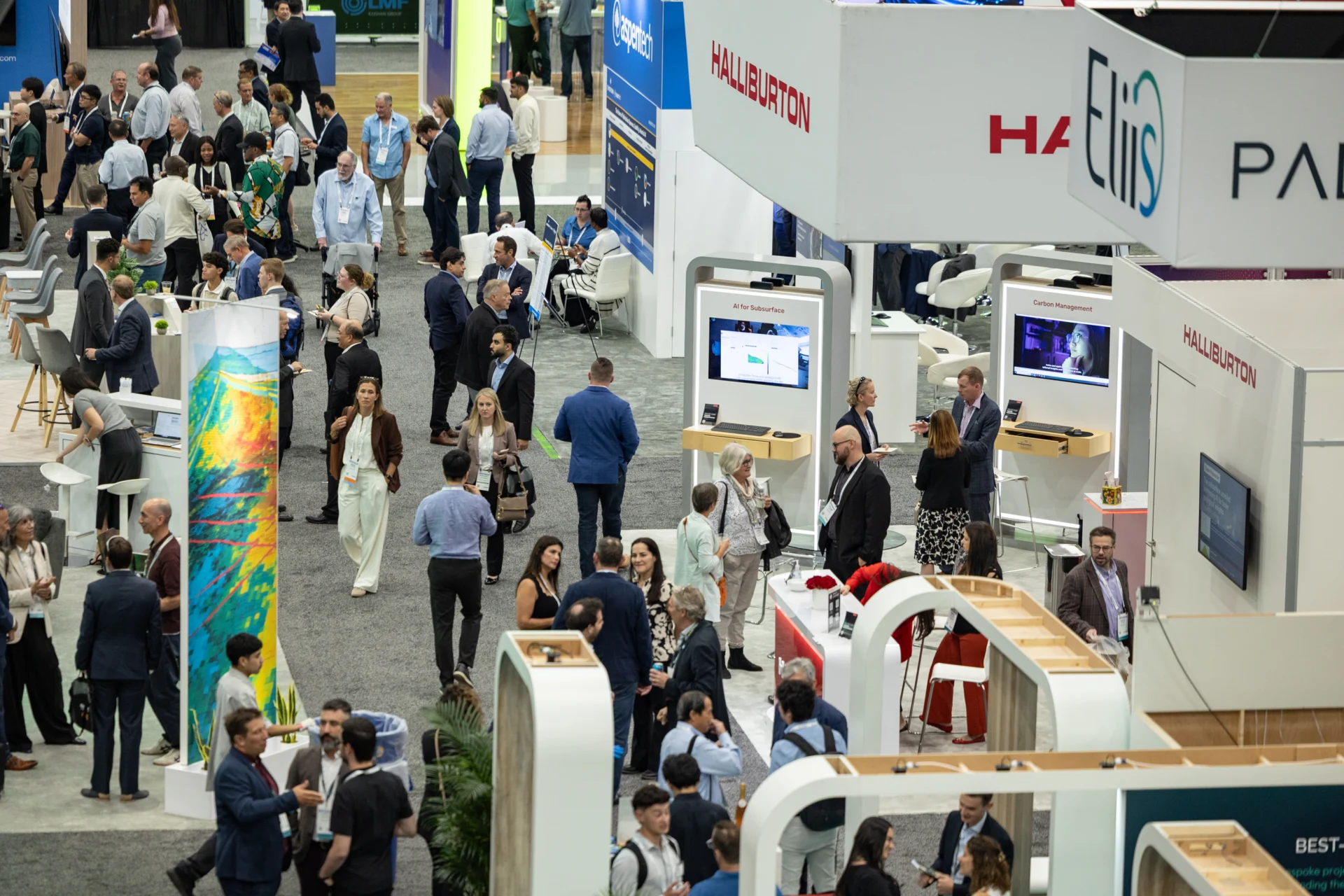
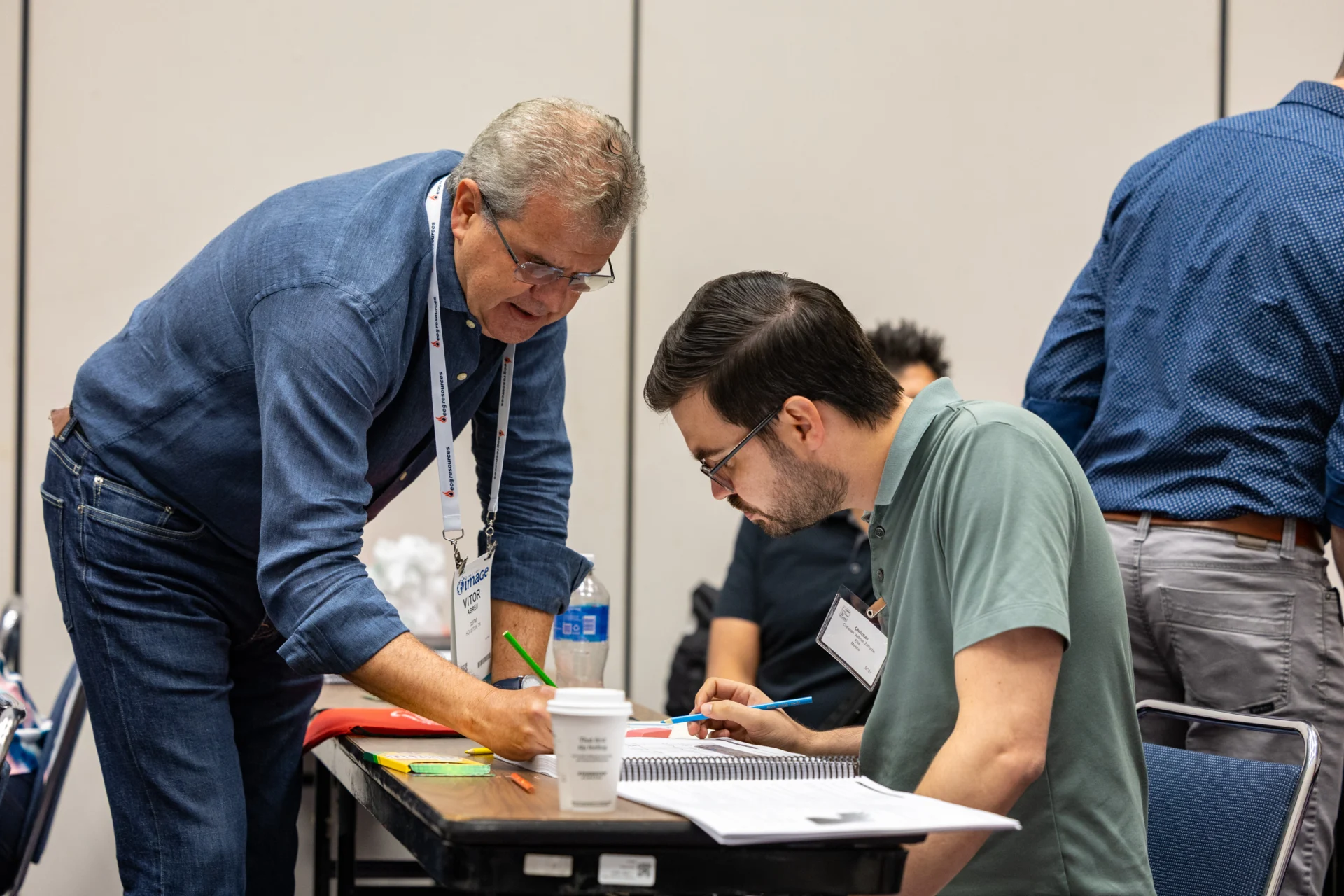
I hope the spring or fall, depending on where you are, is treating you well. As we eagerly approach IMAGE26, I want to share my excitement about the outstanding near-surface geophysics technical programming we have in store for you in Houston. Our Near Surface and Special Sessions will showcase cutting-edge technologies and relevant studies from a diverse array of topics. Please see the full Near-Surface schedule later in this issue.
You may have noticed that we have had a special session on the role of near-surface geophysics in geothermal exploration for a few years now. Geothermal exploration and development have enjoyed an explosion of interest over the last several years. Near-surface exploration continues to be an important consideration in some settings. We are capitalizing on that with a special session, Geothermal Resource Exploration and Characterization, and a panel discussion in the Pavilion, NS Aspects of Geothermal Energy.
A two-part session, Near Surface Geophysics and the Human-Impacted Environment, is for geophysicists, civil engineers, urban planners, citizen scientists, and researchers. Talks will address pressing infrastructure issues in complex near-surface environments. These will include, among other topics, the ongoing efforts to identify and document lost oil and gas wells, which we have highlighted at recent IMAGE meetings. There is also a poster session, Urban, Geotechnical, and Archaeological Applications, that showcases studies in complex, human-impacted environments.
Substantial advances have been made in recent years that address near-surface challenges. Hardware advances enable higher-density, continuous data acquisition, and computational advances significantly improve our ability to extract more information from large, complex datasets. There will be several oral and poster sessions that highlight such advancements: Machine Learning and Artificial Intelligence Applications; Advancing Near-Surface Imaging and Characterization through New Hardware and Algorithms; Advances in Near-Surface Seismic; Innovations in Near-Surface Imaging. Be especially sure to attend New Instrumentation: In Honor of José (Pepo) Arce. José was a long-standing presence, positive influence, and good friend within SEG and the near-surface community. Let’s show up and celebrate José’s legacy by focusing on the adoption and integration of new instrumentation technologies designed to address current near-surface challenges.
We are also proud to host a series of panel discussions in the Near-Surface Pavilion. Topics range from marine construction to water security and more. One of these panels is our yearly Student Career Panel, which I encourage all students to attend. I am especially looking forward to hosting the Access and Culture Committee, formerly the Justice, Equity, Diversity, and Inclusion (JEDI) Committee, for a panel discussion on its recent changes and how it is continuing the mission set out by JEDI.
IMAGE26 in Houston is shaping up to be an impactful event. I look forward to engaging with all of you and hearing about the latest and greatest in near-surface geophysics exploration.
Warm regards,
Christine Downs
Geoscientist
Sandia National Laboratories
New Mexico
2026 SEG Near-Surface Geophysics Technical Section – Elections
As usual, the 2026 SEG Near-Surface Geophysics Technical Section (NSTS) elections will kicked off on 1 June and run through 1 July. If you are an SEG NSTS member in good standing, you will receive an election survey from the SEG marketing team, which will administer the elections. It is important to cast your vote and have your say. The slate of candidates is a very nice selection, with a good mix of experience and geographic diversity. You can explore their information from the main SEG Near Surface webpage here.
2026 Near Surface Research Award Recipient
The 2026 SEG Near Surface Research Award recipient is Wen Liu, a student from the University of Vienna, Austria. Her project was titled “Effects of Water-Rock Interactions on the Mechanical Properties of Rock Masses.”
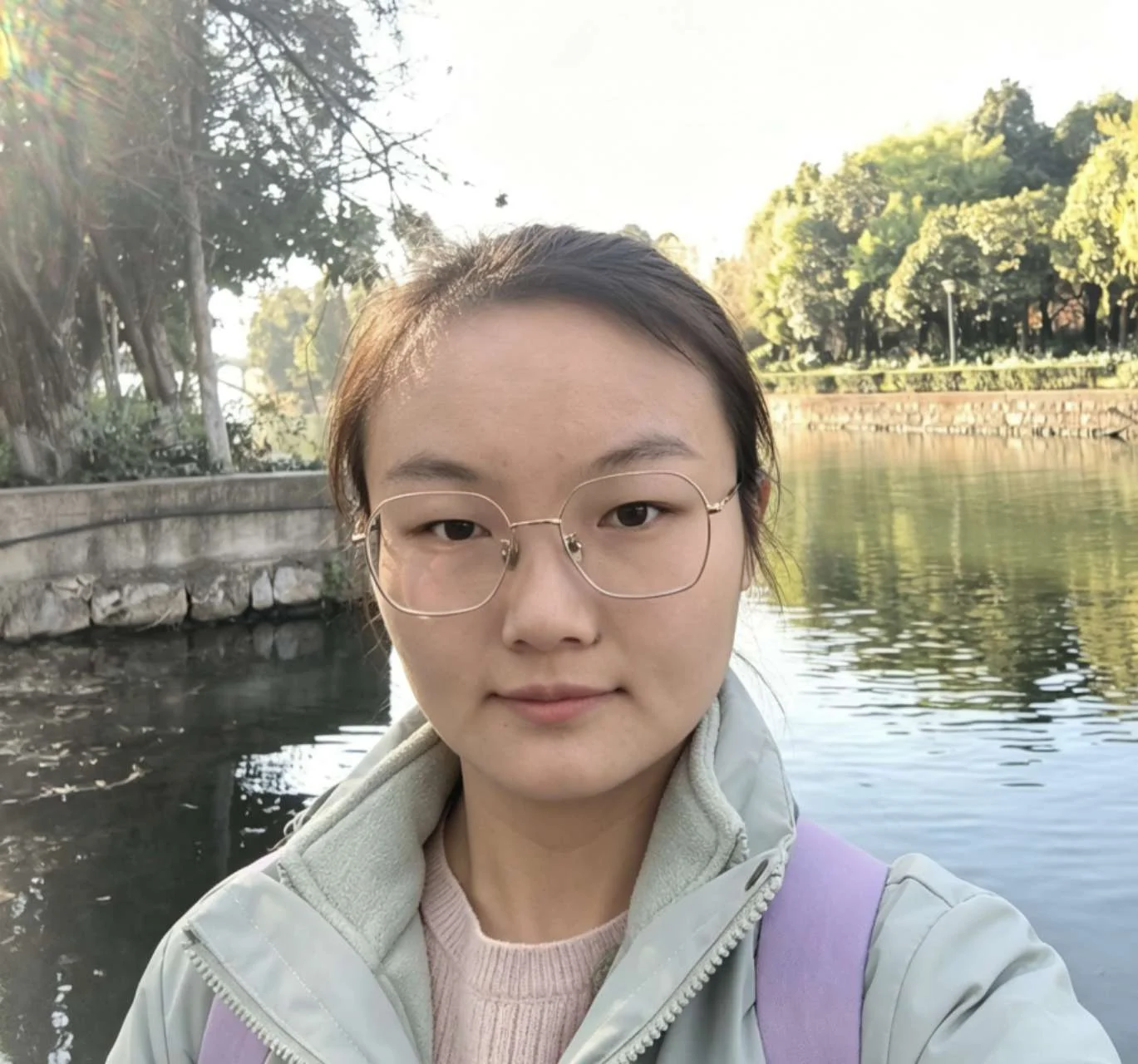
Wen Liu is currently a PhD student at the University of Vienna. Her research primarily focuses on water-rock interactions and their impact on the mechanical weakening of rocks, with a special emphasis on pore structure evolution and mechanical property degradation under fluid-rock coupling. She utilizes low-field nuclear magnetic resonance (LF-NMR) and Spectral Induced Polarization (SIP) to monitor the evolution of pore structures during water-rock reactions and links them to mechanical behavior.
Brief Research Abstract
Water–rock interactions in near-surface environments play a critical role in controlling the stability of geotechnical systems, yet current approaches lack the capability to continuously monitor and predict rock mechanical degradation. This project aims to develop a non-destructive, geophysics-based predictive
framework linking pore-scale evolution to macroscopic mechanical weakening. By integrating low-field nuclear magnetic resonance (LF-NMR), spectral induced polarization (SIP), mechanical testing, and targeted 4D μCT validation, the study will quantify how time-evolving geophysical signals (T₂ spectra and SIP
parameters) relate to strength degradation. Success will be measured by establishing robust quantitative relationships between geophysical observables and mechanical properties, and by developing a validated model capable of predicting rock integrity in near-surface engineering applications.
Global Subcommittee
This subcommittee has been developing webinars on geothermal energy and will be moving on to engineering geophysics related to tunneling in the fall.
A paper has been submitted to The Leading Edge by two of our members, Anja Klotzsche and Julian Ramos, who discussed their joint Agrogeophysics research, which began when they met through the subcommittee. Making connections can bring about exciting developments and enhance research opportunities. Be sure to read about their joint research in the August or September issue of TLE.
You can find upcoming events on the SEG Events Calendar, and we promote our events through the SEG Events LinkedIn page. All webinars are free and will be available on the On Demand and SEG YouTube playlists. Be sure to subscribe to the SEG YouTube channel and SEG‘s On Demand for content.
Hydrogeophysics Subcommittee
Plan to attend the SEG/AGU Hydrogeophysics Workshop in Boise, Idaho, USA, on 20–22 July 2026. Register now.
Since restarting our monthly Hydrogeophysics Webinar Series, we’ve had wonderful engagement — hearing about exciting research and activities within the hydrogeophysics community. In case you missed the first two webinars, they are available to watch on demand:
- Dr. Marc Dumont from the University of Lausanne shared his work on “Geophysics as a hypothesis‐testing tool for western US critical zone hydrogeology.”
- Dr. Solomon Ehosioke from UC Davis and the USDA-ARS shared his work on “Advancing Agrogeophysics: Scaling from Root-Scale Laboratory Experiments to Orchard Systems.” Register and watch
Upcoming Events
- On 19 June 2026, at 12:00 PM Central Time: We will be hosting Dr. Margaret Adeniran, Research Associate, Science for Development Research and Teaching Initiatives. She will be sharing her work on “Non-Invasive Geophysical Monitoring of Crude Oil Contaminant in Coastal Soils – A Laboratory Sandbox Study.” Mark your calendar and register
Check out past webinars hosted by the Hydrogeophysics Subcommittee
IMAGE Sub Committee
IMAGE 26, the world’s top geoscience conference, is coming up 17–20 in Houston, Texas, at the George R. Brown Conference Center. A full 13 sessions at the conference will be dedicated to the near surface, covering a variety of topics and themes. Be sure to mark these down in your conference schedule:
- NS 1: Advances in Near Surface Seismic: Tuesday 1:20–3:00 PM
- SS 10: New Instrumentation: In Honor of José (Pepo) Arce – Tuesday 3:40–5:20 PM
- SS 14: Near Surface Geophysics and the Human-Impacted Environment 1: Wednesday 8:00–9:40 AM
- SS 19: Near Surface Geophysics and the Human-Impacted Environment 2: Wednesday 10:20 AM–Noon
- SS 23: Advancing Near-Surface Imaging and Characterization through New Hardware and Algorithms: Wednesday 1:20– 3:00 PM
- SS 25: Geothermal Resource Exploration and Characterization: Wednesday 3:40–5:20 PM
- NS 2: Electrical and Electromagnetic Methods: Thursday 8:00–9:40 AM
- NS 3: Machine Learning and Artificial Intelligence Applications: Thursday 10:20 AM–Noon
- NS Poster 1: Urban, Geotechnical, and Archeological Applications: Tuesday 10:20 AM–Noon
- NS Poster 2: Inversion of Near Surface Data: Wednesday 10:20 AM–Noon
- NS Poster 3: Innovations in Near Surface Imaging: Wednesday 1:20–3:00 PM
- NS Poster 4: Seismic Applications: Thursday 10:20 AM–Noon
- NS Poster 5: Hydrogeophysics: Thursday 10:20 AM–Noon
Keep an eye out as well for additional sessions in the Technical Program that are not under Near Surface but nevertheless focus on near-surface applications, including DAS, seismic processing, and Geoscientists without Borders. And don’t miss the Near Surface Pavilion in the Exhibit Hall, where each day, panels of invited speakers will share their thoughts on issues facing the near-surface community, ranging from best field practices to geothermal energy to sustainable groundwater and water security.
- Business Meetings: (All are welcome to attend)
- Engineering Geophysics Subcommittee Kickoff Meeting: Thursday 12:00–1:00 PM in the Near Surface Pavilion
- Near-Surface Business Meeting: Tuesday 12:00–1:00 PM in the Near Surface Pavilion
- Near-Surface Reception: Tuesday 7:00–10:00 PM in the Marriott
- Hydrogeophysics Subcommittee Meeting: Wednesday 12:00–1:00 PM in the Near Surface Pavilion
Student Subcommittee
The student subcommittee has been busy developing both Open-Source Software webinars and Pub Club events. All students interested in joining the subcommittee can email [email protected] with the subject line: “I’d Like to Join the Student Subcommittee.” We are preparing for the summer to conduct research, field camps, and internships, and will resume our activities in September. However, if you have an idea, you would like the subcommittee to consider for the fall, please contact [email protected] with the subject line “New Ideas.” We will explore your ideas and see if we can incorporate them into our schedule.
Press Release: “Skinny Two”
New 35-mm, Slim Hole Wall-Lock Borehole Geophone
Geostuff has introduced a new small-diameter, Wall-Lock, Borehole Geophone. Only 38-mm (1- ½ inch diameter with clamp spring, this geophone will fit inside a Schedule-80 2-inch pipe or a Schedule-40 1 ½ inch pipe. People have intermittently requested this product for a long time. Finally, Geostuff is providing one.
Based on the popular BHG-2, this unit is informally called the “Skinny Two” or more formally the BHG-4. Aside from being able to fit inside small-diameter boreholes already installed in the ground, one of the real benefits of the Skinny Two is that you can buy cheaper pipe for new boreholes. The larger geophones fit nicely into a 2 ½-inch pipe, but that size is typically special order, and larger plastic pipe is more expensive. Save on the cost of the downhole survey with the BHG-4.
The Skinny Two will be shipping at the end of May. Geostuff has been building wall-lock geophones for over 30 years now and is recognized as the preferred choice for Vs30 and other near surface borehole geophysics. Learn more on their website www.geostuff.com
Are you interested in featuring new equipment, software or capabilities? Download Press Release Rules.

Tech Nostalgia
What is a Juggie?
Doug Crice, GEOSTUFF
I recently talked to a young geophysics graduate who didn’t know what a juggie was. Colloquial names and phrases are often assigned to the tools of the trade in geophysics, and these names become part of the oral tradition, sometimes changing their meaning over time. This was an example of these words fading into obscurity, especially among the younger geophysicists. I think we ought to make an effort to keep these oral traditions alive.
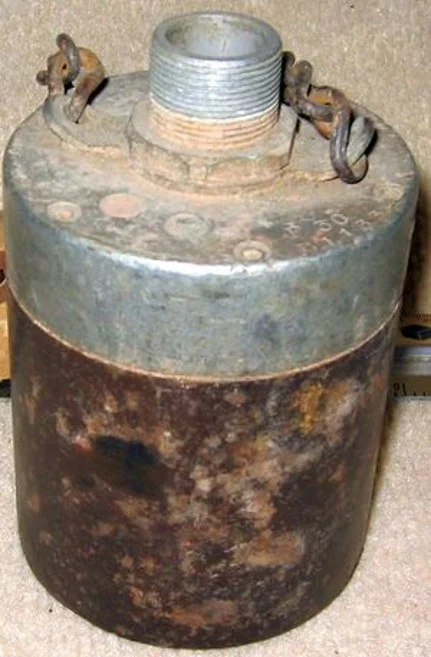
One of these words is “Juggie”.
In the early days of seismic exploration, geophones were big cylindrical objects, perhaps 100 mm in diameter and 150 mm tall. They resembled the clay jugs which were in common use at the time, and geophones were called “jugs”.
The workers on the seismic crews who scurried to deploy and retrieve the geophones began to be known as “jug hustlers”. Because jug hustler doesn’t flow easily from the lips, the term was shortened to “juggie”.
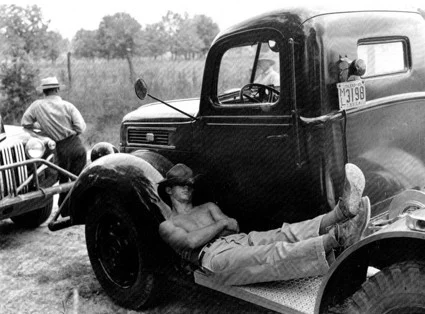
As a rule, juggies became associated with menial labor of a geophysical nature. Many of you readers became acquainted with this work in graduate school. So, if a geophysicist tells you he or she “was a juggie today,” that means the person was providing support on a survey in a capacity that did not involve the use of any expertise or education.
All elderly geophysicists like myself know the origin, proper use, and meaning of the term, but I have on occasion met young geophysicists who had no idea what a “juggie” is. Hence, I thought it worth documenting this piece of scientific trivia.
Call for Volunteers
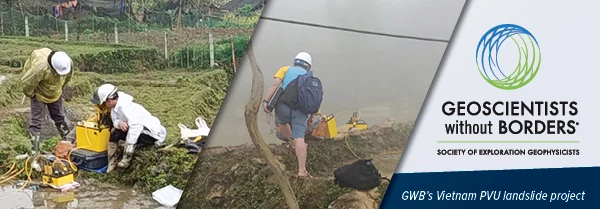
Geoscientists without Borders (GWB) — Call for Volunteers
Would you like to help geoscientists solve some of the world’s greatest humanitarian challenges? Join GWB’s Technical Review Sub-committee (TRSC) and make a direct impact.
About the TRSC
The TRSC supports the GWB program by evaluating and monitoring humanitarian geoscience projects from proposal through completion. GWB issues calls for proposals twice a year, and TRSC members play a central role at every stage:
1. Phase I – Letters of Intent (LoIs)- Review & Recommend Proposals: Review and score submissions based on Basic Information, Need & Benefit, Technical Merit, and Approach (as defined in the application and evaluation forms). Recommend a shortlist of applicants to advance to Phase II.
2. Phase II – Full Proposals – Evaluate & Recommend Award: Evaluate detailed proposals against four criteria: Human Benefit, Technical Feasibility, Sustainability, and Financial Transparency. Recommend projects for one- or two-year funding awards.
3. Progress & Final Reports – Review, Provide Feedback & Approve: Review follow-up reports summarizing project status and any emerging issues. Provide feedback to Principal Investigators (PIs) in the form of technical, logistical, or project management guidance. The PIs also deliver a 15-minute oral update via MS Teams each year for the TRSC’s update. Approve final project reports upon completion.
4. Support Steering Committee – Review: Review and rank IMAGE Special Session abstracts and special calls for proposals.
Who Should Apply
We are looking for global professionals with near surface geophysics techniques, methods, and project/budget management experience. Familiarity with humanitarian applications of geoscience, such as water resources management or disaster risk reduction, is a plus. All volunteers must hold an active SEG membership.
How to Apply
If this sounds like you, or someone in your network, please send a 1–2 page CV to [email protected] and visit www.seg.org/gwb to learn more.
Near-Surface Geophysics Employment Opportunities
Senior Technical Consultant, Geoscience / Geohazards
Worley, Anchorage, Alaska, USA
Sr. Marine Geoscientist Project Manager
APTIM Environmental & Infrastructure LLC, Tampa, Florida, USA
Geophysical Data Processor
AECOM, Denver, Colorado, USA
Staff Geophysicist
ARA, Austin, Texas, USA
Engineering Geophysics Lead – Consultant (Principal Geophysicist)
Land, Houston, Texas, USA
Munitions Response Quality Control Geophysicist
Bristol Alliance of Companies, Golden, Colorado, USA
Géophysicien Principal
SYSTRA, Montréal, Québec, Canada
Ingénieur Chercheur Géophysicien Méthodes Sismiques
BRGM, Orléans, France
Geophysiker
Fugro, Berlin, Germany
Geophysiker
GTU, Hannover, Germany
Auxiliar geofísico
GPR3D, Peñíscola, Valencian Community, Spain
Geophysicist
WSP, Perth, Western Australia, Australia
Principal Geophysicist
WSP, Sydney, Melbourne, or Brisbane, New South Wales, Australia
Geophysics Engineer
Geomotion, Private Limited, Singapore, Singapore
Geophysicist
WSP, Pasig City, National Capitol Region, Philippines
Geophysics Staff
AboitizPower, Makati, National Capital Region, Philippines
Geophysicist
Alt Carbon, Bengaluru, Karnataka, India
Calendar of Events
| Event | Location | Dates | |
|---|---|---|---|
| Non-Invasive Geophysical Monitoring of Crude Oil Contaminant in Coastal Soils – A Laboratory Sandbox Study | Virtual | 19 June 2026 | |
| SEG-AGU Hydrogeophysics Workshop | Boise, Idaho, USA | 20–22 July 2026 | |
| 2026 SEG International Workshop on Geothermal | Wuhan, China | 14–16 August 2026 | |
| International Meeting for Applied Geoscience and Energy (IMAGE) | Houston, Texas, USA | 17–20 August 2026 | |
| 4-Dimensional Seismology: New Dynamic Perspectives on Groundwater and Beyond | Virtual | 9 October 2026 | |
| Near Surface Modeling, Imaging, and Characterization | Al Khobar, Saudi Arabia | 11–13 October 2026 | |
| 8th International Conference on Engineering Geophysics | Al Ain, UAE | 13–15 October 2026 | |
| 2026 Summit on Drone Geophysics | Virtual | 26–29 October 2026 | |
| Asia Pacific Summit on Drone Geophysics | Virtual | 30 November–3 December 2026 | |
| 8th International Symposium on Three-Dimensional Electromagnetics | Rio de Janeiro, Brazil | 6–8 April 2027 |
Teach for SEG
SEG continually seeks to develop new course offerings for our membership in various formats, and we encourage members with specific areas of geophysical expertise as well as recognized industry experts to collaborate with us in developing courses that stimulate professional interest and career development. Learn more.
SEG Tools and Resources
These are just a handful of resources available to SEG members.
- SEG Career Center: Postings for around the globe.
- SEG Wiki: The wiki aims to supply scientific materials to the geoscience community and the public. Keep an eye on the Wiki for past NS Views issues.
- View all resources
Support the Next Generation of Near-surface Geophysicists
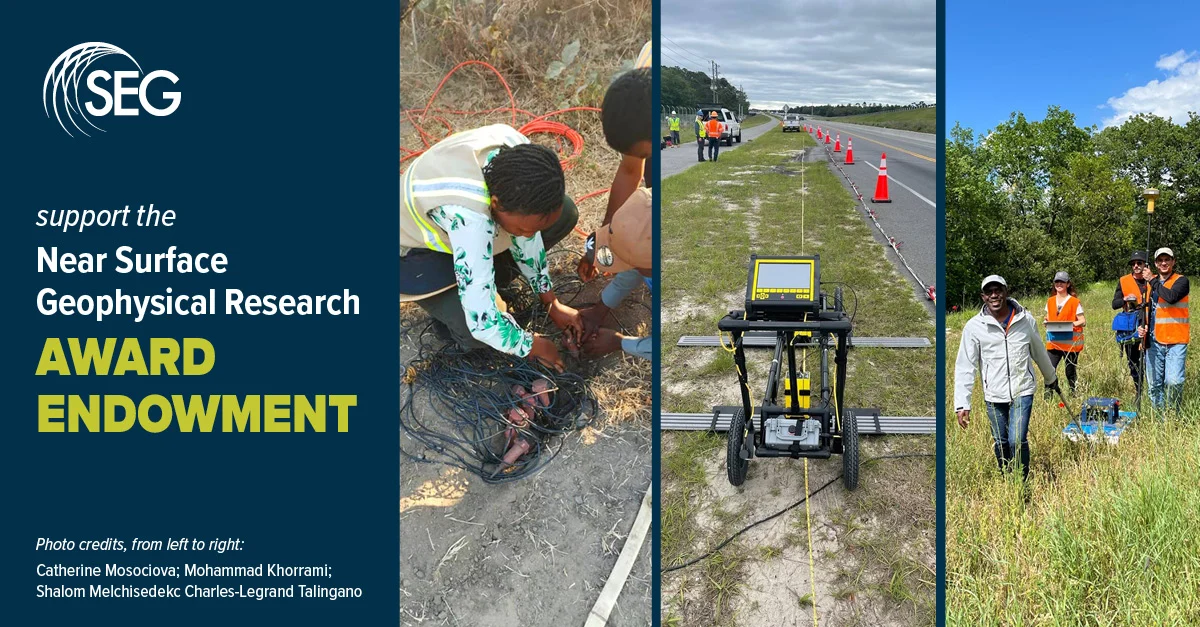
Support the next generation of near-surface geophysicists by making a donation to the Near Surface Research Award Endowment today!
Learn more about the endowment and apply from 1 January – 31 March annually.
In the “Donor Note or Indicate a Specific Program” field, please enter: “Donation is intended to be contributed to the Near Surface Research Award Endowment.”
Why Become a Member?
If you have not already, opt-in to receive our communications. Be sure you are receiving communications from SEG and NSTS.
Get Involved
- NSTS leadership elections
- NSTS leadership and non-leadership positions
Get Access
- SEG journals and other publications online
- Quarterly newsletters
- Quarterly Electronic Table of Contents
- Quarterly TLE Near-Surface Geophysics non-technical focused article
Get Discounts
- Annual Meeting members registration rate
- SEG Books
- SEG workshops
Get Recognized
- Harold Mooney Award
- Near-Surface Student Research Award
- Best Student Chapter Near-Surface Newsletter Article Award
Has your company considered a Corporate Membership? SEG proudly recognizes our Corporate Members for their patronage and support to our organization. We encourage our membership to support these Corporate Members as they are able.
*Check the SEG Dues Structure for more details on publications and information about due-paying assistance.
Contribute to this Newsletter
To promote programs, events, job opportunities, etc., please email us!
Newsletters are published quarterly: March, June, September, and December.