SEG Membership Platform Transition: SEG is upgrading to a new membership platform, MemberSuite. Account login and purchases will be unavailable from Sunday, July 26 – Monday, August 3. Thanks for your patience—questions? Contact.
SEG Membership Platform Transition: SEG is upgrading to a new membership platform, MemberSuite. Account login and purchases will be unavailable from Sunday, July 26 – Monday, August 3. Thanks for your patience—questions? Contact us.
Login
Net-Zero Emissions: Critical Minerals, Hydrogen, Nuclear, Geothermal, Wind, CCUS, and AI
Session Descriptions and Speakers
Day 1: Critical Minerals in Europe and Access to Raw Materials
From hydrogen, lithium, and LNG to uranium and critical minerals, this session explores Europe’s strategic dependencies and opportunities in securing the resources required for the energy transition. The session will first highlight exploration challenges, geopolitics, and the need for responsible sourcing strategies. This discussion will be followed by presentations with the geophysics and geologist’s views and recent innovations.
Session 1: Leadership Dialogue – From Subsurface to Security: Critical Minerals for Net Zero When does a mineral become “critical”? Not when it is rare in the crust, but when geology intersects with geopolitics, scale, and timing. Many of the materials required for batteries, electrified transport, and power infrastructure — including lithium — are geologically abundant, yet strategically constrained by supply concentration, infrastructure limitations, permitting timelines, and processing capacity. For geoscientists, this reframes the challenge: resource definition, exploration maturity, and subsurface uncertainty now influence capital allocation, industrial strategy, and national policy as directly as market demand. Understanding critical minerals therefore demands geoscience that connects resource confidence and subsurface risk to economics, energy ambition, and project feasibility.
Session 2: Access to Raw Materials As the global energy shift towards net zero emissions scope, raw materials and critical minerals play a strategic role in global economic development, industrial growth and energy transition. Critical minerals underline modern technologies including renewable energy systems, electric vehicles, digital infrastructure and variety of industry sectors. Geoscience plays a key role in the critical mineral value chain, with activities ranging from characterization and exploration for sustainable minerals deposits, responsible extraction of minerals, maturation, derisking and monitoring of potential storage systems.
Session 3: Systems Integration Dialogue– From Subsurface to Energy Systems: Geoscience at the Core of Net Zero What is the next frontier for geoscience in a net-zero economy—and how do we prepare the workforce to lead it? This session explores how understanding our surroundings through subsurface expertise, digital transformation, and geophysical insight translate into interconnected energy systems shaped by timelines, regulatory frameworks, and financial constraints. Setting a net-zero ambition is not enough; cross-disciplinary data must be collected, integrated, and analyzed to inform real decisions and measurable action. Achieving net zero therefore requires more than deploying renewables—it demands energy systems grounded in deep subsurface understanding, advanced analytics, and scalable business models. As new energy solutions integrate with established systems, including hydrocarbons enhanced by CCS, this transitional stage is reshaping both the energy landscape and the evolving role of geoscientists and operations professionals. A just transition—sustained by public trust—must be informed by transparent, data-driven choices.
Day 2: Low-Cost, Low-Carbon Electricity — Innovation and the Geophysics Behind It
The day begins with a broad look at the non-technical drivers shaping the energy landscape — including business intelligence, government pledges versus implementation, market gaps, and shifts (e.g. from offshore to onshore wind in Europe). The discussion will then transition into the geophysical innovations enabling cleaner, more efficient power generation.
Session 4: Strategic Conversation – Decarbonization Offshore geophysical operations rely on a specialized fleet of vessels that must deliver high performance, reliability, and operational flexibility in demanding environments. As the maritime sector moves toward the International Maritime Organization ambition of net-zero emissions by 2050, these vessels face increasing pressure to reduce their environmental footprint while maintaining operational capability.
This dialogue will explore decarbonization pathways in offshore geophysics.
Session 5: Low cost, low carbon electricity and the geophysics behind it Much focus and investment have gone toward renewable energy platforms over the past decades. The renewable alternatives to fossil energy are diverse, and all commonly struggle to compete with fossil fuel costs. Decarbonized fossil fuels and energy platforms are an alternative with less attraction lately. Still, developments of late, decreasing carbon footprints, make decarbonized fuels more attractive.
The link to geology and geophysics is in focus here, and for some, like geothermal and decarbonized energy, it is more obvious than nuclear and wind energy. The common factor for all renewable platforms generating electricity is access to rare metals, and lots of it, if our goals are to be met. For offshore wind, a new ultra-high resolution geophysical technology is evolving to secure a good foundation for the massive size of modern wind turbines.
Session 6: Strategic conversation – Nuclear energy Transition to low carbon energy systems requires both a scalable and a reliable energy solutions that can support growing energy needs and at the same time being inline with net zero emissions scope requirements. Nuclear energy provides a continuous, low carbon electricity solution complementing in a large part to the energy generation mix. It can provide a stable base load supporting grid reliability while reducing dependency on fossil fuels and the surplus of energy supports decarbonization goals through industrial applications and heating solutions. Despite challenges related to high capital costs, waste management, public perception, technological advancements and solutions are aimed to improve safety, flexibility and economic feasibility growing the role of nuclear energy and helping to achieve the net zero emissions goals.
Day 3: Managing Emissions, Storage, and the Artificial Intelligence Revolution
Session 7: Emissions and Subsurface Storage To secure public support and trust by all stakeholders in a CCS value chain, a transparent system monitoring the CO2 tonnage for losses underway is needed. There will be a tax credit per ton that will provide the profit for the entire value chain. The efficiency of the CCS value chain is of great interest for each stakeholder, foremost the public that will pay the bill in the form of tax credits or increased taxation on emissions.
A transparent surveillance system will create pressure for innovation at the weakest links. In the end, bankable tonnage stored underground will define the available profit margin for each of the links in the chain. Geophysical measurements will verify entrapment.
Session 8: The Artificial Intelligence Revolution As the global energy landscape moves toward Net Zero, Artificial Intelligence (AI) has emerged as a critical force for managing complexity and scale. This session explores the AI revolution through three essential lenses: Infrastructure, Science, and Strategy.
Infrastructure: We examine how cloud-scale computing and Generative AI modernize data foundations, enabling intelligent systems to optimize operations across the energy and resources sectors.
Science: We address the shift toward data-centric workflows, exploring how uncertainty quantification and methodological variation bridge the gap between model-driven geosciences and data-driven analytics.
Strategy: We look at how AI-driven predictive modeling — from mineral prospectivity to carbon storage — translates into the high-stakes strategic decisions required to de-risk and accelerate the energy transition.
By integrating cloud-scale automation with scientific rigor, this session highlights how a robust digital ecosystem is vital for achieving a sustainable and secure Net Zero future.
23–25 March 2026 | 12:00-17:00 CET (UTC+1) Virtual
Organized by the SEG Europe Regional Advisory Committee
From corporate strategy to regulatory pressure, net zero is reshaping how energy organizations operate—and what they expect from technical professionals. This workshop provides practical insight into net zero emissions, carbon management, and energy transition concepts so you can contribute meaningfully to conversations that increasingly shape projects, funding, and careers.
Learn how net zero targets are defined, measured, and applied—and what they mean for your role, your organization, and the future of applied geoscience. Designed for geoscientists who want clarity, credibility, and confidence in a net zero world.
The SEG Net Zero Emissions Workshop returns for its sixth edition, continuing to bring together geoscientists, economists, policymakers, and industry leaders to examine pathways toward a sustainable and secure energy future. Building on the themes of previous years, the 2026 workshop will explore the intersection of technology, policy, and business strategy in achieving net zero — with a particular focus on Europe’s evolving energy landscape.
With participation from industry, academia, and government, the 6th SEG Net Zero Emissions Workshop aims to inspire actionable dialogue, connect technological innovation with economic and policy realities, and reaffirm the essential role of geoscience in delivering a just and achievable energy transition.
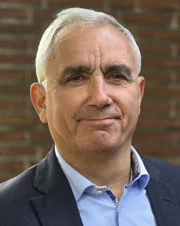
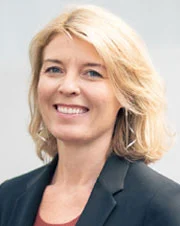
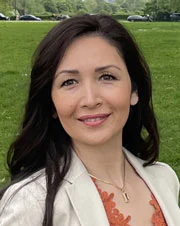
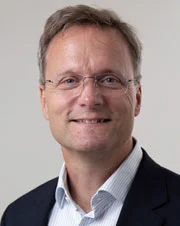
Technical Committee
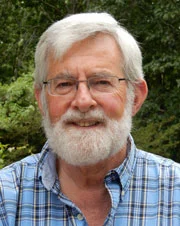
Ying Wang, Geological Survey of Norway
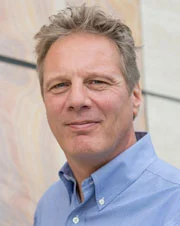
Adriana Ramirez, Managing Director, ACR Insights
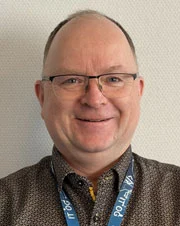
Bent Kjølhamar, TGS
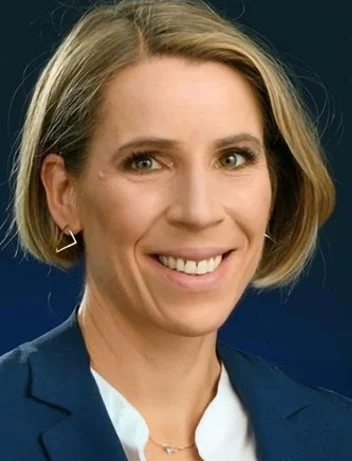
Emin Sadikhov, Equinor
Attend
Registration Fees
Nonmembers: If you are not a member of SEG, you must have a profile before registering. To confirm you do not have an SEG login or if this is the first time registering for an SEG event, set up a profile:
SEG Foundation support enables a limited number of SEG student members to receive registration at no cost. If you are an SEG student member interested in applying for student support, contact [email protected].
Five days before the event begins, the event entry link will be sent to registered attendees who have paid.
Registrations can be cancelled online. Cancellations by 23 February 2026 entitles registrant to a full refund of the registration fee minus US$50 for processing. No refunds will be issued after 23 February 2026.