About
29 June–2 July
University Park, Pennsylvania, USA

Smart CCUS: Geophysical Innovations for Subsurface Energy and Carbon Management is a technical workshop devoted to accelerating geophysics for underground energy systems—spanning Geologic Carbon Storage (GCS/CCUS), geothermal, and hydrogen (storage and production). The workshop emphasizes novel approaches in geophysics, including AI/ML-enabled workflows for site characterization, time-lapse monitoring, reservoir/wellbore integrity, leakage detection, and regulatory readiness.
Through technical sessions, case studies, and a hands-on hackathon, the program aims to map the state of practice, pinpoint gaps, and deliver practical tools and recommendations for operators, regulators, and researchers. The tone is explicitly solution-oriented: connecting field data, geophysical innovations, and modern AI to enable safer, faster, and more cost-effective deployment across CCUS, geothermal, and hydrogen projects.
AI and machine learning are reshaping subsurface workflows by automating key analysis steps, improving data integration, and strengthening physics-informed decision making. In CCUS and underground energy storage, these advances can reduce uncertainty in CO₂ plume behavior, long-term containment, and operational performance—while supporting compliance with permitting frameworks (e.g., Class VI) and risk management standards. The workshop responds to growing demand for rigorous, field-ready geophysical solutions that blend AI/ML with established methods to enhance monitoring, risk assessment, and site integrity across the project lifecycle.
Keynote Speakers


Mrinal K Sen
Professor, Shell Companies Foundation Centennial Chair in Geophysics, University of Texas at Austin
View Bio
Sherilyn Williams-Stroud
Director, Berg-Hughes Center, Dept. of Geology & Geophysics, Texas A&M University
View BioOrganizing Committee
Co-Chairs
- Sanjay Srinivasan, Pennsylvania State University
- Tieyuan Zhu, Pennsylvania State University
- Jenny Joyce, ExxonMobil
Committee
- William Harbert, University of Pittsburgh
- Lianjie Huang, Los Alamos National Laboratory
- Joel Le Calvez, SLB
- Stanislav Glubokovskikh, Berkeley National Laboratory
- Daisy Ning, Michigan Technological University
- Manika Prasad, Colorado School of Mines
- Yi Shen, China University of Petroleum
- Parisa Shokouhi, Pennsylvania State University
- Doug Schmitt, Purdue University
- Mrinal Sen, University of Texas at Austin
- Sherilyn Williams-Stroud, Texas A&M University
- Haibin Di, SLB
- Lily Barkau, Wyoming Department of Environmental Quality
- David Alumbaugh, Berkeley National Laboratory
- Amir Ghaderi, Sintef
- Matthias Imhof, 4111Spyglass Consulting
- Nimisha Vedanti, CSIR
- Erkan Ay, Rice University
- Su Jiang, Carnegie Mellon University
- Hao Hu, University of Oklahoma
- Felix Herrmann, Georgia Institute of Technology
- Tapan Mukerji, Stanford University
Hackathon Committee
- Fawz Naim, Advanced Resources International
- Arindam Pal, Aramco
- Lianjie Huang, Los Alamos National Laboratory
- Bailian Chen, Los Alamos National Laboratory
- Mingliang Liu, Stanford University
Location
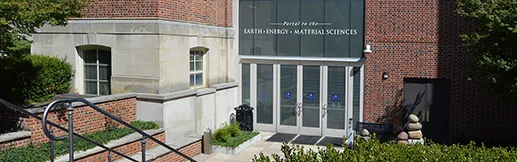
Penn State University
College of Earth and Mineral Sciences
26 Hosler Building
University Park, Pennsylvania, USA 16802
Structure and Activities
Technical Sessions
Challenges across CCUS, EOR, geothermal, and hydrogen storage/production. Innovative geophysical approaches and AI-enabled workflows for characterization, injection, monitoring, and operations. Case histories and lessons learned from global CO₂ injection pilots and energy production and storage projects. Presentations highlighting regulatory challenges and pathways (permit preparation, monitoring plans, reporting).
Hackathon
The AI Hackathon on Class VI CO₂ Permit Review aims to bring together students, researchers, and professionals to develop a functional AI-driven assistant that can review, interpret, and provide feedback on EPA Class VI permit applications for geologic CO₂ storage. Hackathon finals will take place on 02 July at the Smart CCUS workshop!
More details can be found on the Hackathon tab.
Attend
Smart CCUS: Geophysical Innovations for Subsurface Energy and Carbon Management will be held at:
Penn State University
College of Earth and Mineral Sciences
26 Hosler Building
University Park, Pennsylvania, USA 16802
The Smart CCUS workshop will be hosted by Penn State’s Energy Institute, which is in the College of Earth and Mineral Sciences, and supported by the NSF-funded CO₂-SMART (Storage Modeling, Analytics & Risk Reduction Technologies) Center—with USC and Penn State as lead sites. The workshop convenes academia, industry, and government to translate research into deployable, standards-aligned practice for CCUS, geothermal development, and safe hydrogen storage (salt caverns, depleted reservoirs, aquifers).
For more than a century, Penn State’s College of Earth and Mineral Sciences has been a beacon of intellectual leadership on issues of utmost importance to the welfare of the Commonwealth and the nation. The college is creating tomorrow’s leaders in earth, energy, and material sciences and engineering and plays an important role in preparing a diverse and talented workforce, as well as providing new knowledge that will drive the economic vitality of the state and the nation.
Penn State’s Energy Institute is a recognized leader in interdisciplinary energy research, with a strong legacy of partnerships across academia, industry, and government. It provides a dynamic environment for advancing cutting-edge science and translating research into impactful solutions. The infrastructure available within the institute and the College of Earth and Mineral Sciences will be leveraged to facilitate the organization of the workshop.
Venue Information
Workshop activities will take place at the following locations, all within walking distance of each other:
HOST HOTEL:
Nittany Lion Inn
200 W Park Ave
State College, PA 16803
WORKSHOP SESSIONS:
Penn State’s Hosler Building (Burrowes St. Entrance)
26 Hosler Building
University Park, PA 16802
BREAKFAST, LUNCH, POSTERS:
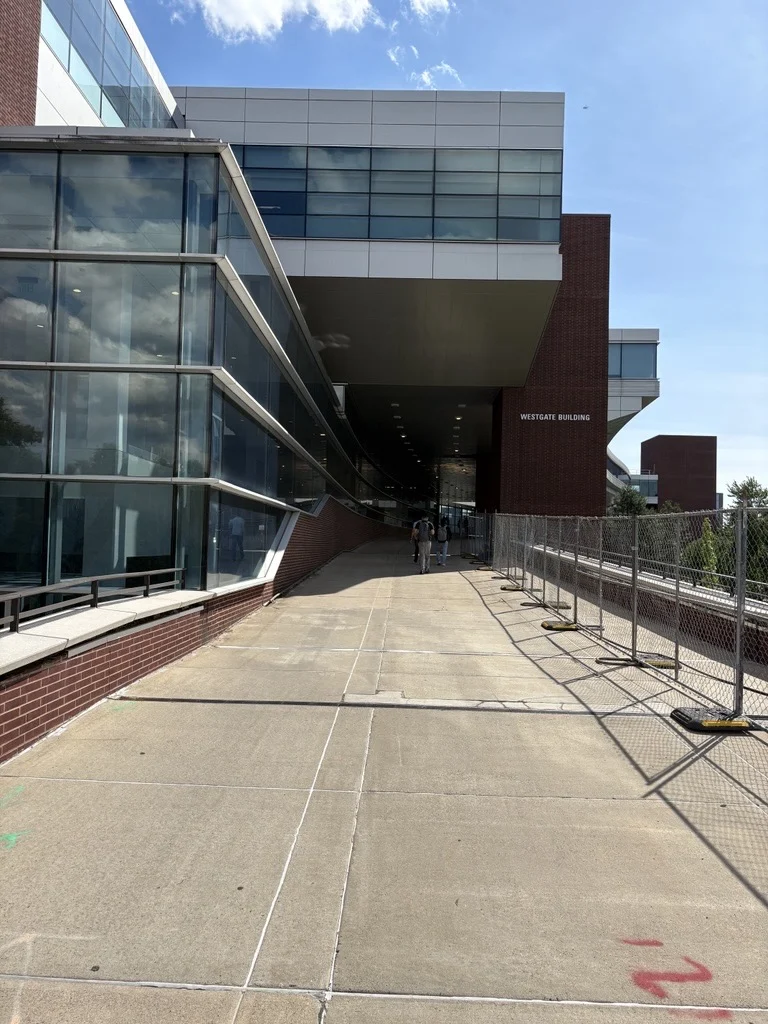
Penn State’s Westgate Building (Reese’s Cafe Area)
216 Westgate Building
University Park, PA 16802
COFFEE BREAKS:
Penn State’s College of EMS Museum
6 Deike Building
University Park, PA 16802

Campus Visitor Parking: All visitor parking requires payment or a valid permit 24 hours a day, seven days a week. Daily rates are available for visitor parking.
The closest car park to both the Nittany Lion Inn and the Hosler Building is the Nittany Deck, located at 180 Fischer Road. Parking in the Nittany Deck is $3/hour for visitors or hotel guests receive one free parking voucher per day.
Travel Arrangements
Special Hotel Rate:
Nittany Lion Inn
200 W. Park Ave.
State College, PA 16803
The Nittany Lion Inn is offering a special workshop rate of US$169 per night for a standard guestroom (does not include tax). The group rate will be honored from 28 June – 03 July. Make your reservation online using this private link or call Central Reservations directly at 1-814-863-5050 and mention the group code: SEGC26B.
The cut-off date for the special rate is 28 May 2026.
Other hotels in the area:
Graduate by Hilton State College
125 S. Atherton St.
State College, PA 16801
Hyatt Place State College
219 W. Beaver Ave.
State College, PA 16801
Scholar Hotel By Hilton
205 E. Beaver Ave.
State College, PA, 16801
The Penn Stater Hotel
215 Innovation Blvd.
State College, PA 16803
Hilton Garden Inn
1221 E. College Ave.
State College, PA 16801
Transportation
- State College Regional Airport (SCE) (~6 miles from campus)
- Harrisburg International Airport (HIA) (~70 miles from campus)
- Pittsburgh International Airport (PIT) (~3 hour drive from campus)
Visas/Letters of Invitation
The United States requires citizens of many foreign countries to obtain visas to enter the U.S. If you are not a U.S. citizen and are intending to attend the Smart CCUS: Geophysical Innovations for Subsurface Energy and Carbon Management workshop, please ensure you obtain the correct visa to enter the country. The process of obtaining a visa may take several months. Detailed information on the U.S. Visa Policy can be found online at the U.S. Department of State website.
It is your responsibility to apply for a passport, visa, or any other required documents and to demonstrate to consular officials that you are properly classifiable as a visitor under the U.S. law.
You may print your own workshop visa invitation letter here. SEG supplies this letter for visa purposes only. If your visa application is denied and SEG receives a copy of the denial by email before 15 June 2026, your registration fee will be refunded in full. After 15 June, your registration fee will be refunded less a US$50 processing fee.
Please note this letter does not guarantee that you will be granted a visa, nor does it commit SEG to assist you in obtaining a visa.
Registration
REGISTER NOW for Smart CCUS: Geophysical Innovations for Subsurface Energy and Carbon Management
Nonmembers: If you are not a member of SEG, you must have a profile before registering. To confirm you do not have an SEG login or if this is the first time registering for an SEG event, set up a profile:
- Click on Login at the top of the SEG website
- Click Get Started
Return to the Smart CCUS Workshop website to register by clicking on the Register Now button.
Students: SEG Foundation support enables a limited number of SEG student members to receive registration at no cost. If you are an SEG student member interested in applying for student support to attend the workshop, complete a 2026 SEG Workshops Registration Grant application here. To join SEG, click here.
The workshop registration fee includes the poster reception (Monday evening), breakfasts (Monday – Thursday), and lunches (Monday – Wednesday).
Early Registration Rates: On or before 1 May 2026
US$800 SEG Member | US$900 Nonmember | US$200 SEG Student Member | US$250 Student Nonmember
Standard Registration Rates: After 1 May 2026 and Onsite
US$950 SEG Member | US$1,050 Nonmember | US$200 SEG Student Member | US$250 Student Nonmember
Questions about registration? Contact [email protected].
Refund/Cancellation Policy
Registrations can be cancelled online. Cancellations by 29 May 2026 entitles registrant to a full refund of the registration fee minus $50 for processing. No refunds will be issued after 29 May 2026.
Program
Technical Program Now Available!
Workshop Schedule
| Day 1 — Monday, 29 June | |
| 7:00 – 8:00 | Registration and Continental Breakfast |
| 8:00 – 8:30 | Workshop Welcome |
| 8:30 – 9:30 | Keynote – Biondo Biondi, Stanford University |
| Geophysical Site Characterization I | |
| 9:30 – 10:15 | Keynote – Neeraj Gupta, Battelle |
| 10:15 – 10:30 | Networking Break |
| 10:30 – 11:00 | Invited Talk – David Tang, ExxonMobil Upstream Integrated Solutions |
| 11:00 – 12:00 | Technical Presentations |
| 12:00 – 1:00 | Lunch (provided) |
| Geophysical Site Characterization II | |
| 1:00 – 1:45 | Keynote – Heather Bedle, University of Oklahoma |
| 1:45 – 2:15 | Invited Talk – William Ampomah, New Mexico Tech |
| 2:15 – 2:55 | Technical Presentations |
| 2:55 – 3:20 | Networking Break |
| 3:20 – 4:00 | Technical Presentations |
| 4:00 – 5:00 | Panel Discussion |
| 5:00 – 5:30 | Break + Walk to Poster Reception |
| 5:30 – 7:30 | Poster Reception |
| Day 2 — Tuesday, 30 June | |
| 7:00 – 8:00 | Continental Breakfast |
| Cost Effective Monitoring I | |
| 8:30 – 8:45 | Keynote – David Alumbaugh, Lawrence Berkeley National Lab |
| 8:45 – 9:15 | Invited Talk – Takeshi Tsuji, University of Tokyo |
| 9:15 – 9:55 | Technical Presentations |
| 9:55 – 10:30 | Networking Break |
| 10:30 – 11:50 | Technical Presentations |
| 11:50 – 1:00 | Lunch (provided) |
| Cost Effective Monitoring II | |
| 1:00 – 1:45 | Keynote – Mrinal Sen, University of Texas at Austin |
| 1:45 – 2:15 | Invited Talk – Gordon Holmes, ExxonMobil |
| 2:15 – 2:55 | Technical Presentations |
| 2:55 – 3:20 | Networking Break |
| 3:20 – 4:20 | Technical Presentations |
| Day 3 — Wednesday, 01 July | |
| 7:00 – 8:00 | Continental Breakfast |
| Integrity and Risk | |
| 8:00 – 8:45 | Keynote – Sherilyn Williams-Stroud, Texas A&M University |
| 8:45 – 9:15 | Invited Talk – Katie Smye, University of Texas at Austin |
| 9:15 – 9:55 | Technical Presentations |
| 9:55 – 10:30 | Networking Break |
| 10:30 – 12:10 | Technical Presentations |
| 12:10 – 1:00 | Lunch (provided) |
| Artificial Intelligence (AI) Optimization | |
| 1:00 – 1:45 | Keynote – Weichang Li, Zhejiang University |
| 1:45 – 2:15 | Invited Talk – Youzuo Lin, University of North Carolina at Chapel Hill |
| 2:15 – 2:55 | Technical Presentations |
| 2:55 – 3:20 | Networking Break |
| 3:20 – 4:20 | Technical Presentations |
| Day 4 — Thursday, 02 July | |
| 7:00 – 8:00 | Continental Breakfast |
| 8:00 – 12:00 | HACKATHON: Class VI CO₂ Permit Review Assistant |
Hackathon
AI Hackathon: Class VI CO₂ Permit Review Assistant
HACKATHON SUBMISSIONS ARE NOW CLOSED. STAY TUNED FOR MORE INFORMATION.
This AI Hackathon brings together students, researchers, and professionals to develop an AI-driven assistant (chatbot) that enables effective review and actionable feedback on the subsurface characterization aspects of EPA Class VI Geologic CO₂ storage permit applications.
This is more than a competition; it’s a hands-on virtual internship experience where participants will:
- Develop a chatbot tool aligned with EPA Class VI permitting
- Apply AI/ML to subsurface data and geoscience workflows
- Collaborate with industry mentors and domain experts
- Gain project experience that can be listed on resumes
Scope
The Hackathon is subsurface-focused and includes the following technical domain:
- Site geologic characterization (Geology, Geophysics, Petrophysics, Reservoir Engineering)
- Injection and confining zone integrity
- Faults and fracture characterization
- Geomechanics and pressure limits
- Area of Review (AoR) and corrective action, including legacy wells
- Well construction (subsurface components only)
- Testing and monitoring plans (subsurface monitoring only)
Attendance Requirements
Teams are required to attend the following:
- Virtual kick-off on April 13
- Virtual meetings with the assigned Technical Mentor on mutually agreed upon dates
- Hackathon finals (virtual or in-person) on the afternoon of July 02
- If attending in-person, team members must purchase registration to the Smart CCUS workshop at Penn State, 29 June – 02 July
- If attending virtually, a link will be provided at no charge
Important Dates
- Call for Submissions Opens: 26 January 2026
- Submission Deadline EXTENDED: 17 March 2026
- Virtual Kick-off: 13 April 2026
- Hackathon Finals: 2 July 2026 (hybrid event)
Important Documents
Deliverable Expectations
Accepted teams will be expected to develop a fully functional chatbot prototype, demonstrate the system through a live demo, and provide clear documentation describing their approach, assumptions, and limitations. (More details in the AI Hackathon Draft)
Questions & Contact
For questions related to the hackathon, please email Fawz Naim
We are also looking for mentors experienced in subsurface and Class VI permits. Please contact [email protected] or the SEG Research Committee if you are interested in mentoring a team.
Sponsorship Opportunities
You are invited to offer your support of the Smart CCUS: Geophysical Innovations for Subsurface Energy and Carbon Management Workshop by purchasing a sponsorship from the following list of opportunities.
- Platinum — US$5,000
- Gold — US$2,000
- Silver — US$1,000
- Lunch — US$3,000
- Student Support — $1,000 minimum
To review sponsorship opportunities in detail and to sign up as a workshop sponsor, please download the Sponsorship Form and submit it to [email protected].
Important Documents
Important Dates
Call for Abstracts Closed
17 March 2026
Registration Opens
18 February 2026
Hackathon Submission Deadline EXTENDED:
17 March 2026
Early Registration
On or before 1 May 2026
Smart CCUS Workshop
29 June–2 July 2026
Our Sponsors
Venue, Poster Reception, Lunch Sponsor

Gold Sponsors


Student Support