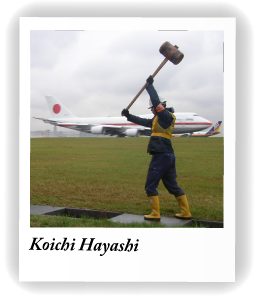
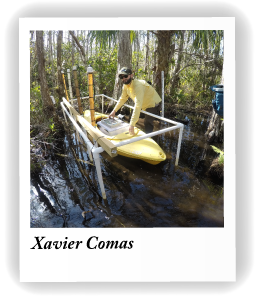
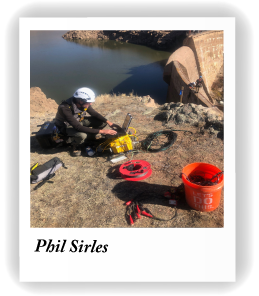
In one photo and one sentence … share your best field or laboratory experience with us!
Showcase your photography skills for a chance to win a prize at the International Meeting for Applied Geoscience and Energy (IMAGE), taking place 25–28 August in Houston, Texas, at the George R. Brown Convention Center. Submit your photos by 31 March 2025. Winners will be announced at the Near Surface Technical Section (NSTS) Reception. This is a unique opportunity to have your work recognized by leading professionals in the field of geoscience and energy.
Who Can Submit
All current SEG Near-Surface Geophysics Technical Section students and emerging professionals (0-5 yrs. past graduation) members.
Contest Requirements
Student: Must be an active NSTS student member. Include the degree level you are working toward, and graduation date. Must provide 1 photo and a one sentence description to share with photo.
Emerging Professionals: Must be an active SEG NSTS member and provide your most recent graduation date and degree level. Must provide 1 photo and a one sentence description to share with the photo.
Photo submission opened:
1 January 2025
Photo submission deadline:
31 March 2025
Winners will be announced at the International Meeting for Applied Geoscience and Energy (IMAGE) during the NSTS reception. You do not need to be present to win.
By submitting a photo, you are giving SEG and the NSTS of SEG permission to use your photo for promotional purposes.
Questions? Email us.
Prizes
Student Prizes
1st Place: One-year access to Journal Bundle G
2nd Place: Your choice of e-book in the SEG Library
Emerging Professional Prize
1st Place: One-year access to Journal Bundle G
2nd Place: Your choice of e-book in the SEG Library
Judging Criteria
Minimum Photo Resolution: ≥ 600 dpi
Composition
- How well does the photo illustrate near-surface geophysics in the field?
- Is the picture well framed with the subject of the photo the focus?
- Is the photo visually pleasing to the viewer?
Compliance and Safety
- Permission: Please ensure that anyone appearing in the photos has provided consent. Make sure to explain how the photos may be used (e.g., internal reports, presentations) and document their agreement by noting it in an email or recording it in a log for future reference.
- Safety Compliance: Photos should only be taken in safe locations. Make sure no one is distracted from safety-critical activities, and all individuals are wearing the proper PPE (hard hats, safety glasses, etc.) as required. Please reference the table below. Final determination of appropriate safety gear is made by the NSTS leadership.
- Restricted Areas: Avoid photographing areas marked as restricted or containing sensitive equipment or operations.
- Confidentiality: Be mindful not to capture proprietary or confidential information in the images, such as detailed equipment or operational data.
- Environmental and Cultural Sensitivity: Ensure that photography does not damage the environment or violate local customs.
| Activity | Required PPE | Recommended PPE |
|---|---|---|
| Hiking: Outcrops, trails, desert environment, and lose rock. | Appropriate sturdy footwear, (i.e. hiking boots with sturdy uppers and Vibram-type non-slip soles), emergency whistle | Long pants and long sleeve shirts; sun glasses; sun screen; wide-brimmed hat; water canteen; hiking stick; insect repellent; two-way communications |
| Roadside activities: Outcrops, road-cuts, and access to outcrops | Safety vest (high visibility), traffic warning markers (“cones”) | Traffic warning lights |
| Sampling with rock hammers (chipping): Slopes, out crops, hand specimens | Safety glasses | Sturdy, non-slip gloves |
| Sampling with digging tools: Slopes, outcrops, pits (no deeper than knee height!) | Safety glasses; sturdy, non-slip gloves; sturdy boots. | Steel-toed work boots |
| Activities near semi-stable cliff faces or under overhangs: Outcrops, sampling | Rock climbing helmets (or other appropriate head protection), safety glasses | |
| Boating | PFD, Type I or II (Life vest), footwear with non-slip soles | Sun screen, sun glasses, water canteen, wide brimmed hat, gloves if rowing, paddling, or sailing |
| Cold weather activities: Arctic sampling, outcrops | Thermal footwear, gloves, safety glasses, two-way communication, personal survival kit | Waterproof footwear, thermal underwear, hand warmers, vehicle survival kit |