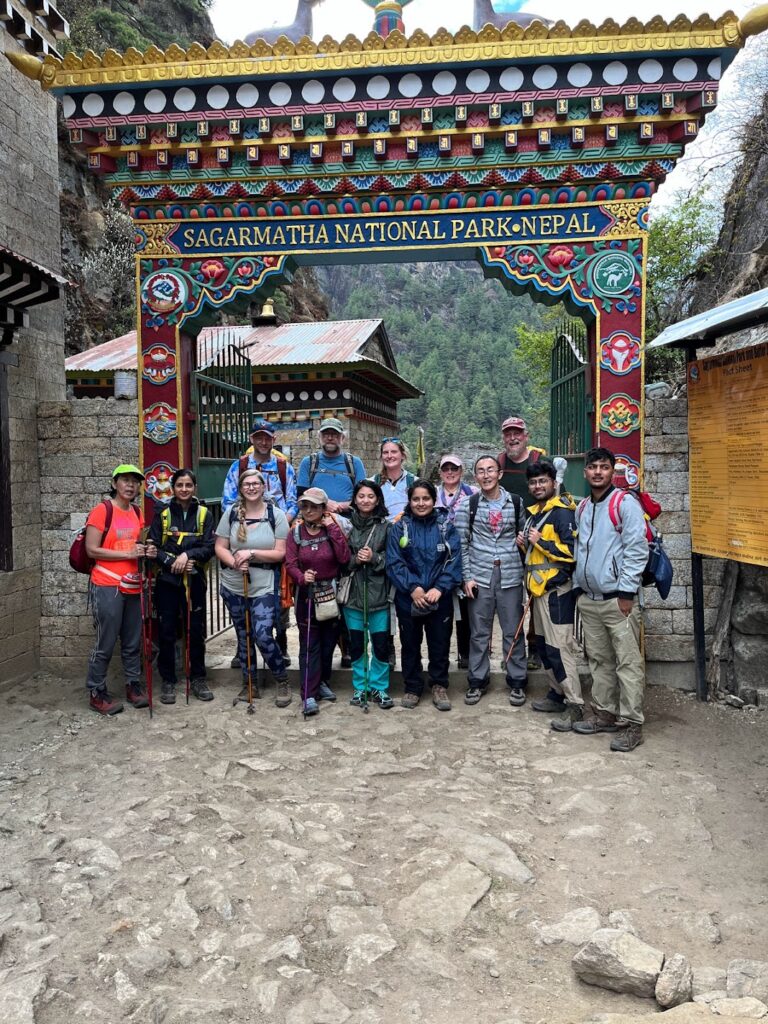
This Geoscientists without Borders® (GWB) community driven project combined the physical, applied, and social sciences to help two communities in the Sagarmatha National Park (SNP), Nepal reduce their long-term water vulnerability. Phortse and Khumjung-Kunde communities were identified due to their need for improved water security. They raised considerable funds (Phortse raised >$100,000USD) toward the project to support their clean-water initiatives. Both communities asked for the project team’s assistance to determine what options were best for their village, including, but not limited to, the placement of the system needed in order that it be resistant to the impacts of climate change and earthquakes.
In addition to helping provide communities with sustainable, long-term access to potable water, this project helped train over 12 US and Nepali students in geological and geophysical field methods, social sciences and data analyses. Importantly, the students also learned to assess, analyze, discuss and solve environmental issues from a broad ranging transdisciplinary approach in some of the highest altitude settlements in the world. The U.S. and Nepali students were mentored by, and worked with, a group of international scientists and experts in a multitude of fields. They also liaised with local communities, government, and nonprofits and aid organizations and gained tools to better understand the complexity of multiple issues from the international network to draw upon to solve the complex environmental problems.
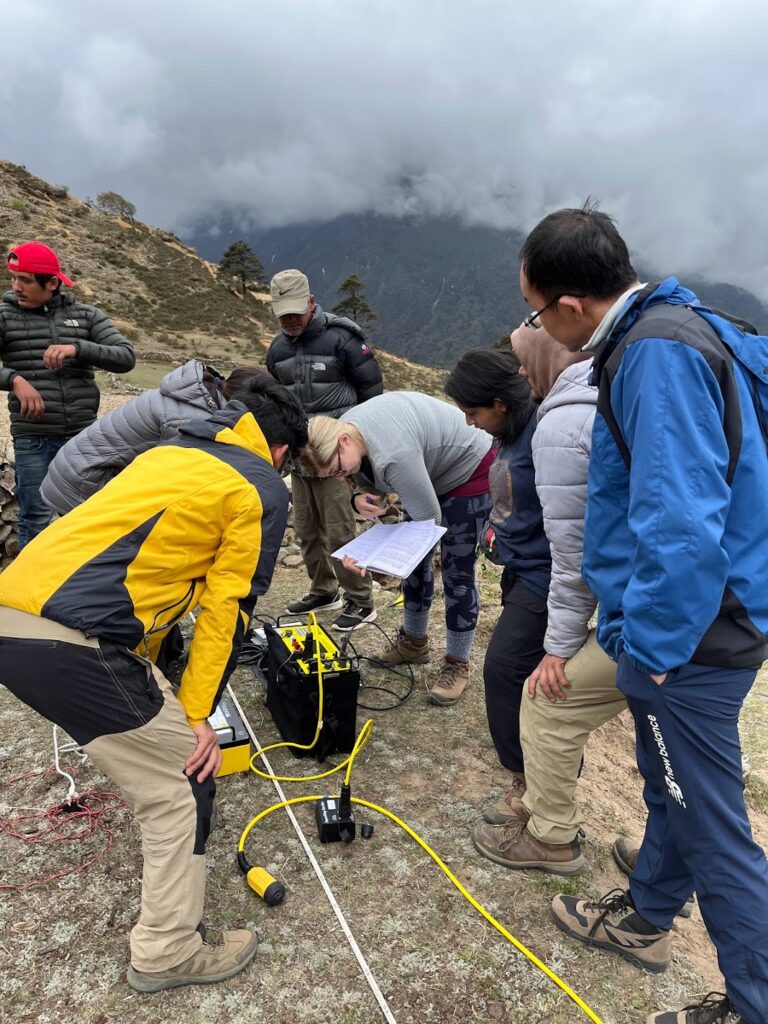
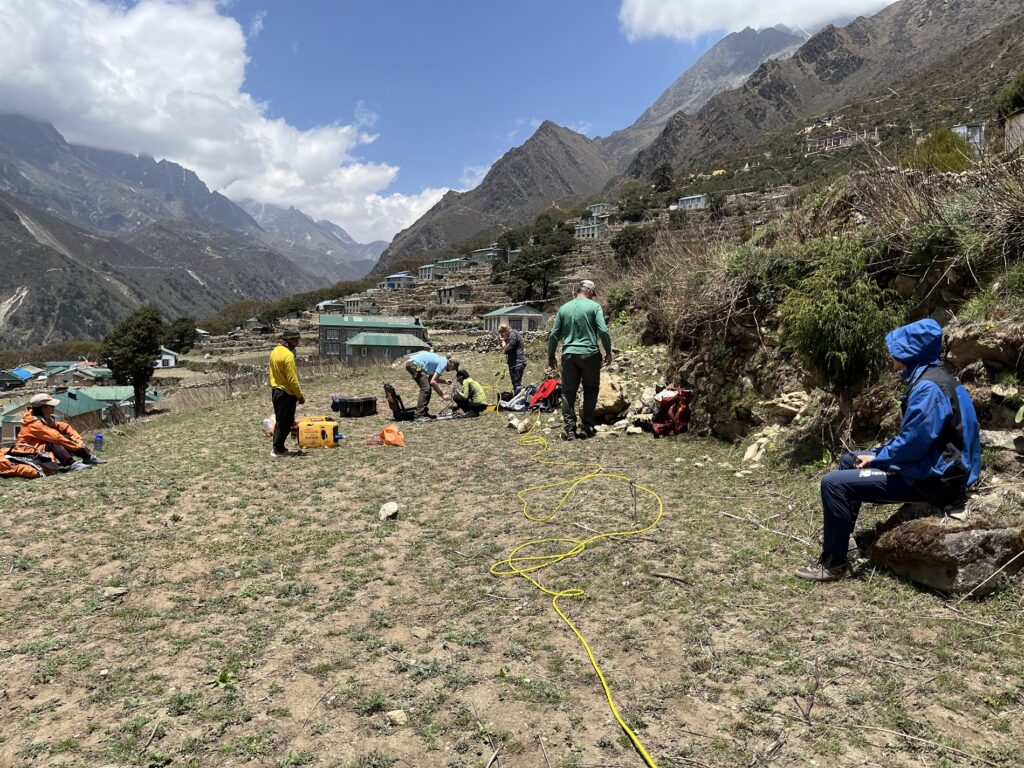
This approach supported a three-tiered project to help the communities minimize their long-term vulnerability to climate change and earthquakes. The communities themselves were responsible for the building and management of their water facilities. This GWB project focused on a combination of water quality and quantity testing, Electrical Resistivity Tomography (ERT) surveys, and community engagement. The team’s primary goal was to give data to the villagers for improving access to the drinking water and improve its quality for these two communities in the SNP by: characterizing the community aquifers; assessing location of locally built filtration systems; helping to develop long term strategies for water management and help mitigate the long-term effects of climate change; minimize potential earthquake risk; and finally assuring project sustainability. Although this is a very complex problem with many objectives, all these factors are interrelated and possible with the help and support of the communities, the National Park Service and the non-government aid organization, “Action for Nepal.”
Even though the project has officially ended, the team has already identified a possible groundwater resource in both communities. At this time they believe that only Phortse should pursue this option. The villages of Khumjung-Kunde need to safeguard their recharge zone before then can proceed with the groundwater option. Water quality and quantity assessment is ongoing. Water quality was found to meet Nepal and WHO drinking water standards for physical and chemical parameters. However, almost all water sources, throughout the region and including bottled water, contains microplastic and fecal contamination (identified using E.coli content). The data is currently being used, in combination with hydrological data, for ARIMA modelling to assess the impact of climate change. Preliminary modelling suggests that increasing external temperature is impacting the type (more rain, less snow) and mode (more extreme events) but not the total volume of precipitation. Quantifying recharge and discharge are ongoing.
Subscribe to SEG’s Communication Center for updates on GWB events, projects, volunteer opportunities, and global presentations. Access reports, deadlines, and news, and join the discussion on social media and SEG’s free Slack community.