This course initially covers how and what fiber optic cables record, their sensitivity and how they can be used. Next, we cover seismic wave propagation and what FO DAS measures. Then we will look at acquisition and processing of the data, and multiple field data applications. As such this course will cover the full spectrum of FO DAS theory and applications.
Fiber optical (FO) cables are highly sensitive to mechanical motion. As such they can be used as distributed seismic sensors along the FO cable length on the surface or in boreholes. In many cases FO cables already exist over some field installed by facilities or production engineers. As such this data can be readily recorded with minimal cost for reservoir characterization and monitoring purposes including geo-sequestration applications. Properties of FO-DAS seismic data, that separates it from geophone seismic data, that are important to know and understand are covered in this short course. The course also covers acquisition, processing and practical field applications of FO-DAS.
Duration
16 hours, 4 half-days, 1.6 CEU with certificate upon completion
Intended Audience
Geophysicists, geologists, petroleum Engineers, completion Engineers, petrophysicists, and all levels of management
Prerequisites (Knowledge/Experience/Education required)
Some subsurface expertise, beginners to advanced
Learner Outcomes
- Understand under what conditions FO DAS technology can be beneficial
- Evaluate the technical strengths and weaknesses of FO DAS projects
- Articulate key issues in FO DAS acquisition design and processing
- Understand how to use FO DAS data for reservoir characterization and monitoring
Instructor Biography
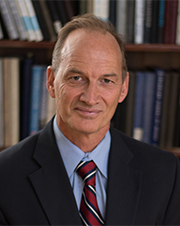
Ali Tura is Professor of Geophysics and Co-director of the Reservoir Characterization Project at Colorado School of Mines. His expertise is in the areas of petroleum systems, reservoir characterization and monitoring, seismic methods, CO2 and sequestration, fiber optics technology, and data analytics. He is also Chief Scientist at Tulip Geosciences, a geosciences consulting and training company. Before this, he was Geophysical Senior Fellow at ConocoPhillips, Geophysical Advisor at Chevron, and 4D subject matter expert at Shell. He has been an SEG member and active in the industry for more than 37 years and served as SEG Vice-president, Board of Directors of SEG-SEAM Inc., Chairman of the SEG Research Committee, Chairman of the Editorial Board of The Leading Edge, and Chairman of the SEG Global Affairs Committee. Read more.