About
10–12 September 2026
Shenzhen, China
Distributed fiber optic sensing is a rapidly developing technology with significant disruptive potential across the energy sector. By transforming a single fiber into thousands of sensors, it provides unprecedented insights into complex subsurface and infrastructure processes, enabling novel optimizations and significant energy and cost savings. This technology is poised to play a major role in monitoring energy production, distribution, and critical transition activities such as oil and gas storage, Carbon Capture, Utilization, and Storage (CCUS), hydrogen storage, geohazard monitoring, civil engineering, and smart city applications.
This workshop will focus on the latest optical sensing technology and explore high-value use cases that are driving innovation adoption. We aim to create a unique forum that bridges the gap between technology creators – including researchers in sensor hardware, fibers, cables, and interrogators – and technology end-users – such as application experts in seismic imaging, downhole and surface monitoring, and reservoir production management. Accordingly, the workshop will prioritize the cross-fertilization of accessible ideas over deep specialist discourse, aiming to engage our interdisciplinary audience.
The scope is designed to cater to professionals across the entire Energy Transition landscape. This includes traditional sectors like oil and gas and geothermal, as well as emerging fields such as CCUS, hydrogen storage, mining and radioactive waste disposal, and civil engineering and smart city infrastructure monitoring. We invite geoscientists, geophysicists, reservoir and completion engineers, data scientists, optical sensing professionals and civil engineers from operating companies, service providers, academia, manufacturers and research institutions to contribute and participate.
As the industry seeks more cost-effective and scalable long-term monitoring solutions, the advent of affordable technologies like Distributed Acoustic Sensing (DAS) and advanced optical point sensors has been transformative. Significant synergies are now emerging between surface and downhole monitoring applications, making fiber optic sensing increasingly attractive for comprehensive reservoir imaging and long-term surveillance projects.
The Society of Exploration Geophysicists (SEG) is committed to fostering the distribution of cutting-edge knowledge and technology. We are confident this workshop will be an invaluable opportunity for all participants to stay informed about these rapid evolutions, present their latest findings, and network with key individuals and organizations shaping the future of fiber optic sensing for energy applications.
General Chairs
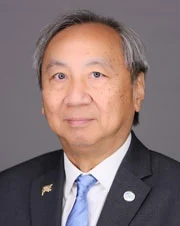
Arthur Cheng
SEG

Hong Cao
BGP Inc., CNPC
Technical Co-chairs

Danping Cao
China University of Petroleum (East China)

Feng Cheng
Zhejiang University

Zuyuan He
Shanghai Jiao Tong University

Ge Jin
Colorado School of Mines

Hongjun Lu
Research Institute of Changqing Oilfield, CNPC

Roman Pevzner
Curtin University

Mark Willis
Consultant

Baoshan Wang
University of Science and Technology of China
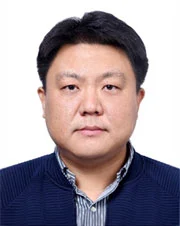
Yibo Wang
Institute of Geology and Geophysics, CAS

Gang Yu
BGP Inc., CNPC

Jingjing Zong
University of Electronic Science and Technology of China
Technical Committee Members
- Shujie An, BGP Inc, CNPC
- Yanjun Chen, Central South University
- Yuanzhong Chen, BGP Inc., CNPC
- Wenjie Hao, Center for Hydrogeology and Environmental Geology Survey, CGS
- Shaoping Lu, Sun Yat-sen University
- Yanpeng Li, BGP Inc., CNPC
- Xing Liang, Zhejiang Oilfield of CNPC
- Gangding Peng, The University of New South Wales
- Zhenhua Rui, China University of Petroleum (Beijing)
- Liyang Shao, Southern University of Science and Technology
- Heping Shen, Beijing Appsoft Technology Co., Ltd.
- Qizhen Sun, Huazhong University of Science and Technology
- Zinan Wang, University of Electronic Science and Technology of China
- Chuandong Xu, Sinopec Geophysical Research Institute Co., Ltd.
- Ge Zhan, TGS-NOPEC Geophysical Company
- Wentao Zhang, Institute of Semiconductors, CAS
- Xuping Zhang, Nanjing University
- Yi Zhang, China National Logging Corporation
- Zhengguang Zhao, University of Emergency Management
- Tao Zhu, Chongqing University
- M Hafizal B Mad Zahir, PETRONAS
(Listed in alphabetical order by last name)
Contact
SEG China Office
TEL: +86 10-58205048 Ext.802
Email: [email protected]
Call for Abstracts
Abstract Topics
- Advances in Fiber Optic Sensing (Interrogator, Fiber, Cable, Sensors & Conveyance)
- Upstream, Coal, Mining Intelligent
- Well Completions, Subsea Installations and long-term monitoring
- Fiber Optics in Energy Transition
- CCUS, Hydrogen, Critical Minerals
- Gas Hydrates
- Renewable Energy (Wind, Geothermal, Solar) & Critical Zone Monitoring
- Imaging and Monitoring
- Downstream, Construction, Civil Engineering, Smart Cities
- Environmental and Infrastructure Monitoring
- Groundwater Dynamics
- Geohazard Monitoring and Mitigation
- Near-surface Characterization and Monitoring
- Infrastructure Monitoring
- DAS Data Management, Simulation, Processing and AI
- Field Applications and Application Studies
- Instrument
Abstract Format
- Length and Illustrations: 2-4 pages (maximum 4 pages), with the total length including text and optional illustrations meeting the requirement.
- Formatting Requirements: Adopt a two-column layout, using 8.5×11-inch paper. A 1-inch margin must be reserved on all sides of the page for all text content.
- Content Requirements: Sufficient research details shall be included to facilitate the review committee in evaluating the quality of the submitted work.
- Language: The entire abstract must be written in English.
- Font and Font Size Specifications:
- Title: 1-2 lines, placed at the top of the page, bold, 12-point font.
- Authors: Placed immediately below the title, Roman italic, 10-point font.
- Main Text: Roman font (follow standard formatting if no additional font size is specified).
- Submission Format: Only Adobe Acrobat PDF format is accepted.
Attend
Visa Information
To request an invitation letter to attend 2026 SEG 2nd Workshop on Fiber Optics Sensing— as part of applying for your China Visa — please contact the SEG China office at [email protected]. Please note that SEG does not guarantee that you will be granted a visa, nor does it commit SEG to pay any expenses you may incur. It is the sole responsibility of the attendee to obtain the necessary paperwork for entry to China.
Travel Convenience: China’s 240-Hour Visa-Free Transit Policy
We are pleased to inform you that citizens from 55 designated countries (including the United States, the United Kingdom, Australia, and most EU member states) may be eligible for the 240-Hour (10-Day) Visa-Free Transit Policy when attending our conference in China.
This policy offers a streamlined travel option if your itinerary meets the following core requirements:
- Your Route: You must be in transit to a third country or region. A typical eligible route is: Your Home Country → China (Conference City) → A Third Country/Region. A direct round-trip ticket back to your country of origin does not qualify.
- Your Documents: You must hold a valid passport from an eligible country and a confirmed onward ticket departing China for a third destination.
- Your Stay: You can stay within the designated region for up to 10 days (240 hours). During this period, you are permitted to engage in conference attendance, tourism, and short-term business activities.
Key Points for Your Planning
- Entry/Exit Ports: You must enter and exit China through specific ports approved for this policy (e.g., major international airports in Beijing, Shanghai, Guangzhou, Chengdu, Xi‘an).
- On-Arrival Process: The permit is applied for and granted upon your arrival at the Chinese immigration counter.
- Not for Direct Return: This policy does not apply if you plan to return directly to your home country from China. In that case, a regular visa is required.
For Full Details & Official Information
We strongly recommend reviewing the official information for the most accurate and complete rules, including the full list of eligible countries and ports.
Should you require a longer stay or a different travel itinerary (e.g., returning directly to your home country from China), please apply for a corresponding Chinese visa (such as an M-F Visa) in advance at a Chinese embassy or consulate.
We look forward to welcoming you to the workshop!
Important Documents
Important Dates
Call for Abstracts opens:
15 February 2026
Call for Abstracts closed:
30 April 2026
Early Bird Registration opens:
20 May 2026
Full rate registration starts:
10 July 2026